
THRIVEWELL SCHOOLS
trauma training + wellness rooms

SHIFTING MINDSETS
|
TRANSFORMING CULTURE
|
SHIFTING MINDSETS | TRANSFORMING CULTURE |

The research is clear: restorative, trauma-informed practices build safe, supportive environments where students and staff can thrive.
District staff, administrators, and educators who are equipped with these skills see positive impacts across all California School Dashboard metrics.
THE BIG PICTURE
We partner with districts to provide science-based, trauma-informed training, coaching, and technical support to strengthen existing resources and transform school climate and culture.
We also offer expertise and guidance on developing Wellness Rooms — a cost-effective, Tier I mental health support that reduces office referrals and reliance on school counselors.
WHAT WE OFFER

how restorative, trauma-informed practices work
Restorative, trauma informed practices:
Address root causes of misbehavior
Teach students self-regulation skills
Pivot from punitive to restorative consequences
Anchored in relationships
Short-term investment in training, customized to your site’s needs, provides a sustainable, measurable, trauma-informed foundation that improves outcomes for students and staff.

Social-emotional supports aren’t optional—they create the foundation for learning.
Focusing only on academics can limit student success, no matter how innovative the program. Schools need to prioritize both academics and social-emotional support to help students thrive.
students with unmet needs can’t learn

measure what matters
Traditional metrics like grades or attendance may not show the immediate impact of trauma-informed training.
ThriveWell uses baseline and year-end staff surveys to track school climate and culture. Over time, schools often see:
Fewer suspensions and referrals
Higher student engagement
Better teacher retention
Long-term gains in attendance, academics, and graduation
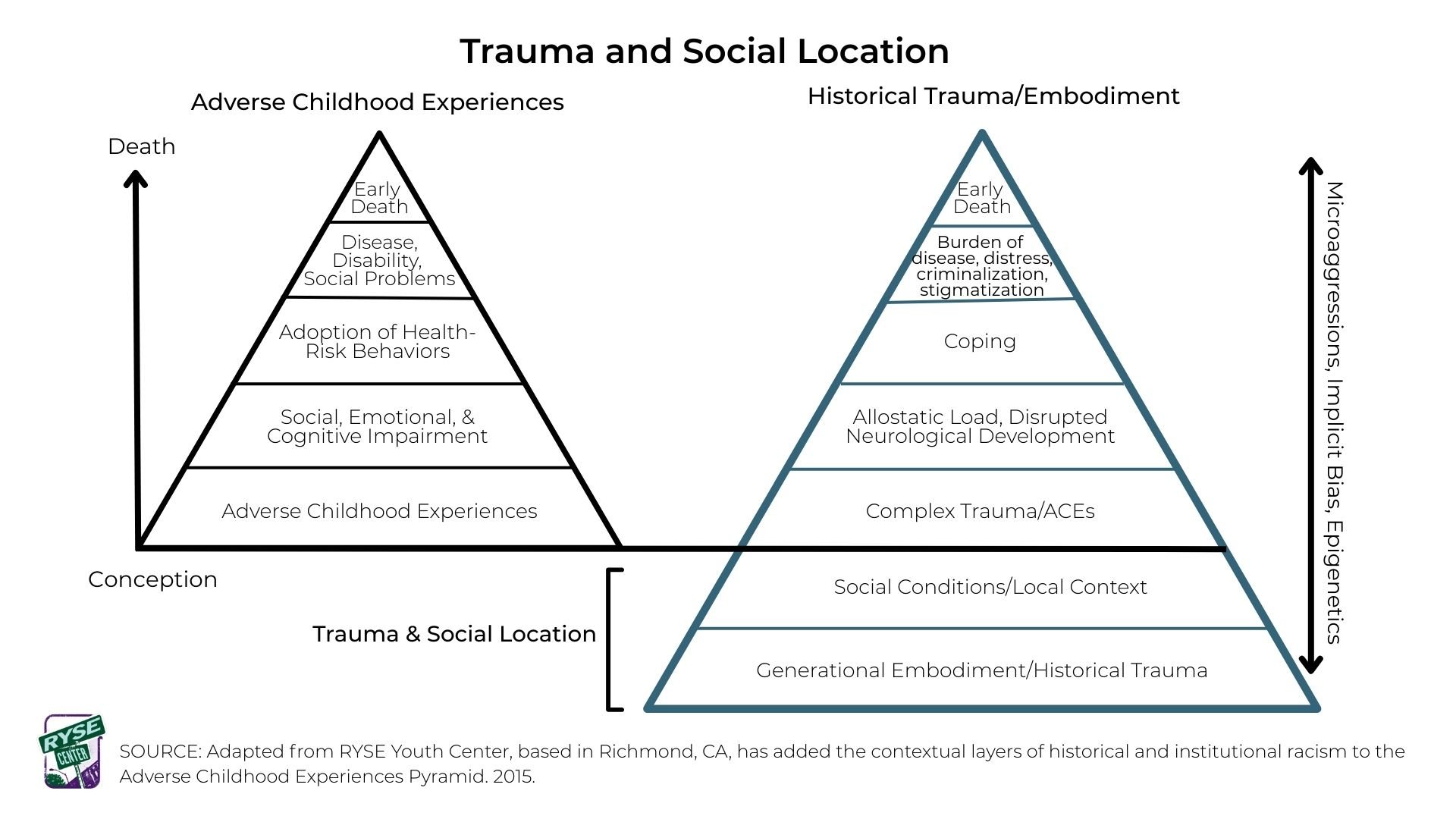
trauma & racial justice are inseparable
Trauma affects everyone, but not equally. People of color often experience added trauma from systemic racism and historical oppression, impacting access to education and opportunity.
Effective trauma-informed approaches are culturally responsive, equity-centered, and grounded in safe, supportive relationships that help students learn and educators thrive.